
Online Hifz Classes — Structured Quran Memorization with a Dedicated Hafiz Tutor
Hifz is the complete memorization of the Quran — all 114 Surahs, 30 Juz, and 6,236 Ayah. A person who has memorized the full text is called a Hafiz (male) or Hafiza (female). More than 200 million people around the world have memorized the complete Quran, making it the most widely memorized book in human history.
Beginning Hifz is one of the most significant decisions a Muslim family can make. It is also one where the method matters more than the motivation. Strong motivation is common. The structured daily revision system that makes memorization stick — and prevents what has been memorized from fading — is what most families starting Hifz do not know about in advance.
The Prophet said:
“The best of you are those who learn the Quran and teach it.”
— Sahih al-Bukhari, 5027
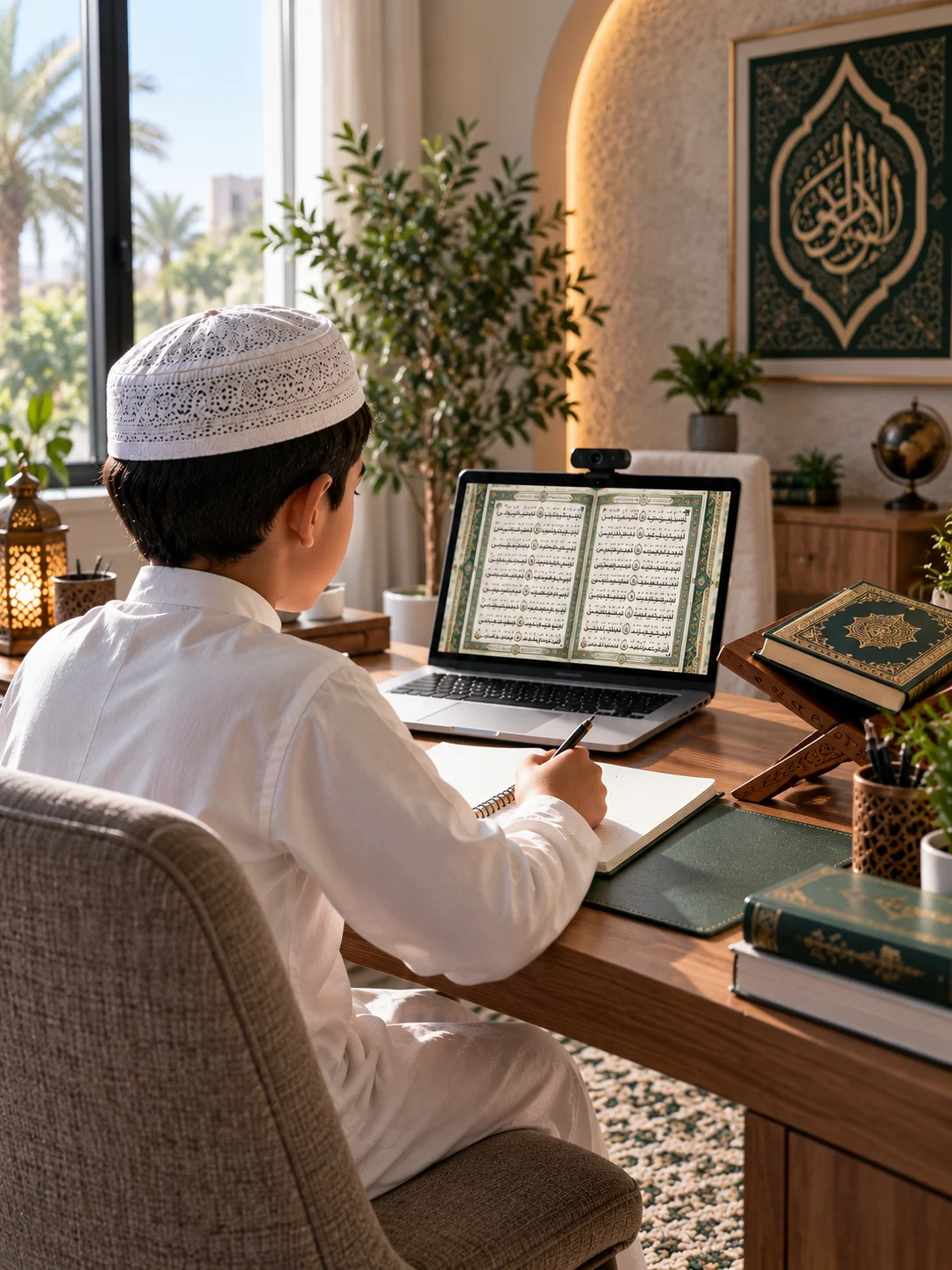
One Hafiz tutor. One student. Five days a week.
Structured daily revision — the system used in serious Hifz institutions for generations.
The Real Challenge of Hifz Is Revision, Not Memorization
Most families think about Hifz in terms of memorizing new portions. A child memorizes Surah Al-Mulk. Then Surah Al-Qalam. Then Surah Al-Haqqah. The Juz grows.
What happens to Surah Al-Mulk while the child is learning Surah Al-Haqqah? Without a structured daily revision cycle, previously memorized Surahs fade. A child who has memorized Juz 30 and is now in Juz 28 finds that by the time they reach Juz 25, the early material is slipping. This is the most common reason Hifz programs fail — not a lack of effort, but a lack of revision structure.
Our Hifz program uses the four-part daily system followed in serious Hifz institutions for generations:
Sabaq — New Daily Portion
The new portion assigned for today’s lesson. Typically 3 to 10 Ayah depending on the student’s age and current pace.
Sabaqi — Recent Revision
Sections memorized in the recent past, reviewed in today’s session to keep them fresh.
Manzil — Rotating Revision
Older Juz reviewed across the week on a rotating schedule to maintain the full memorized load.
Dhor — Complete Weekly Revision
The complete weekly revision of everything memorized to date, run once per week to confirm nothing is fading.
Every Hifz student works with one dedicated Hafiz tutor for the full program. No rotation.
What Makes Our Hifz Program Different
Daily Sessions Are Prioritized
Five sessions per week is the recommended frequency for serious Hifz students. Hifz memorization fades without daily reinforcement. Two or three sessions per week is workable for older teenagers and adults, but five is the standard for children working toward completion.
Same Tutor Throughout
Every session is with the same Hafiz teacher who knows the student’s memorization history. There is no “catch-up” for a new tutor who does not know which Ayah the student memorized three months ago.
Structured Home Practice
The tutor assigns specific home practice — which Sabaq to review, which Manzil rotation is due — so the student’s time between sessions is productive, not just waiting for the next class.
Monthly Progress Reports
Every month, parents receive a written report showing which Juz or Surah was completed, the current revision load, attendance, and the tutor’s notes on pace and areas needing more attention.
Who This Course Is For
Children from Age 7
The most common and most effective age to begin Hifz. Memory is strong, habits are still forming, and the time available before adult responsibilities increases makes childhood the optimal window.
Teenagers
Slightly slower progress than young children typically, but stronger discipline and better ability to manage the revision load independently.
Motivated Adults
Adults who want to begin Hifz later in life. Progress is slower than for children but entirely achievable with consistent five-day-per-week sessions and daily home revision. Many adults choose to memorize specific Juz rather than the complete Quran.
Students Who Have Started Hifz Elsewhere and Stalled
We assess where the student is, which portions are solid, and which are fading, and build a recovery plan from there.
Prerequisites — Tajweed First
Strong Tajweed is required before beginning Hifz. A student who memorizes the Quran with incorrect pronunciation is memorizing errors into permanent memory. Correcting Tajweed after portions are memorized is significantly harder than building it correctly from the start.
If Tajweed has not been formally assessed and corrected, we recommend the Tajweed course first.
Before starting Hifz, the student needs:
Completion of Noorani Qaida — able to read Arabic text independently
Tajweed formally assessed and corrected — correct pronunciation of all letters
Commitment to daily home revision between sessions — 20 to 30 minutes minimum
If prerequisites are not yet met, we assess in the first trial session and map the right starting point.
Start Hifz the Right Way — With a Structured Revision System
Three full, live, one-to-one sessions with your dedicated Hafiz tutor. No credit card, no commitment. We assess prerequisites in the first session.
Realistic Timelines for Hifz
These are realistic, not aspirational. Some children complete faster with exceptional memory and daily practice. These timelines assume consistent attendance and daily home revision.
| Profile | Sessions / Week | Realistic Timeline |
|---|---|---|
| Child age 7 to 9 | 5 sessions/week | 4 to 6 years |
| Child age 10 to 12 | 5 sessions/week | 5 to 7 years |
| Teenager | 5 sessions/week | 5 to 8 years |
| Motivated adult | 5 sessions/week | 7 to 10+ years |
Why we publish realistic timelines:
Many families begin Hifz with an unrealistic expectation of 2 to 3 years. When the reality of 5 to 7 years becomes apparent, motivation drops. We prefer families to begin with full knowledge of what the commitment requires — and then commit fully and consistently. That consistency is what produces Hafiz.
Pricing for Online Hifz Classes
All plans include private 1-on-1 live Zoom sessions with your dedicated certified Hafiz tutor, structured revision assignments, and monthly written progress reports.
$35/mo
2 days / week
$4.38 per session
- 30-minute 1-on-1 lessons
- Same dedicated tutor
- Monthly written reports
- Cancel anytime
$50/mo
3 days / week
$4.17 per session
- 30-minute 1-on-1 lessons
- Same dedicated tutor
- Monthly written reports
- Cancel anytime
$65/mo
4 days / week
$4.06 per session
- 30-minute 1-on-1 lessons
- Same dedicated tutor
- Monthly written reports
- Cancel anytime
$80/mo
5 days / week
$4.00 per session
- 30-minute 1-on-1 lessons
- Same dedicated tutor
- Monthly written reports
- Cancel anytime
$100/mo
5 days / week
Bespoke Revision Cycle
- 5 days/wk + structured revision
- Dedicated Hafiz mentor
- Sabaq, Sabaqi, Manzil tracking
- Cancel anytime
Frequently Asked Questions — Online Hifz Classes
Everything families ask before starting Hifz.
What age should my child start Hifz?
Does my child need to complete Noorani Qaida before Hifz?
How many sessions per week does Hifz require?
Will my child have the same Hafiz teacher throughout?
What happens if we miss a week due to school holidays or illness?
Can adults do Hifz online?
Book Your Hifz Trial — 3 Free Sessions, No Credit Card
Three full, live, one-to-one sessions with your assigned certified Hafiz tutor. No credit card, no commitment. We assess prerequisites in the first session and map the right starting point for your child.
Register
Tell us the student’s age, current Quran level, preferred time zone, and schedule. We confirm prerequisites in the first session.
Hafiz Tutor Matched
We match a dedicated Hafiz or Hafiza tutor before the first trial session — within 24 hours.
Complete 3 Free Sessions
Attend three complete live lessons, then choose whether to continue. No payment until you are ready to commit.
Book Your Hifz Trial
No payment required · 3 full sessions · No credit card · No commitment
[kadence_form id=”1430″]