Surah Hashr Last 3 Ayat (22–24): Tafsir, Benefits, and Virtues
Surah Al-Hashr, the 59th chapter of the Holy Quran, shines as a powerful Medinan surah with 24 verses. It reveals Allah’s might, recounts the exile of Banu Nadir, and strengthens believers’ faith. The last three ayat (59:22–24) stand out, praising Allah’s names and attributes. These verses spark peace, deepen connection, and offer mercy to all who recite them.
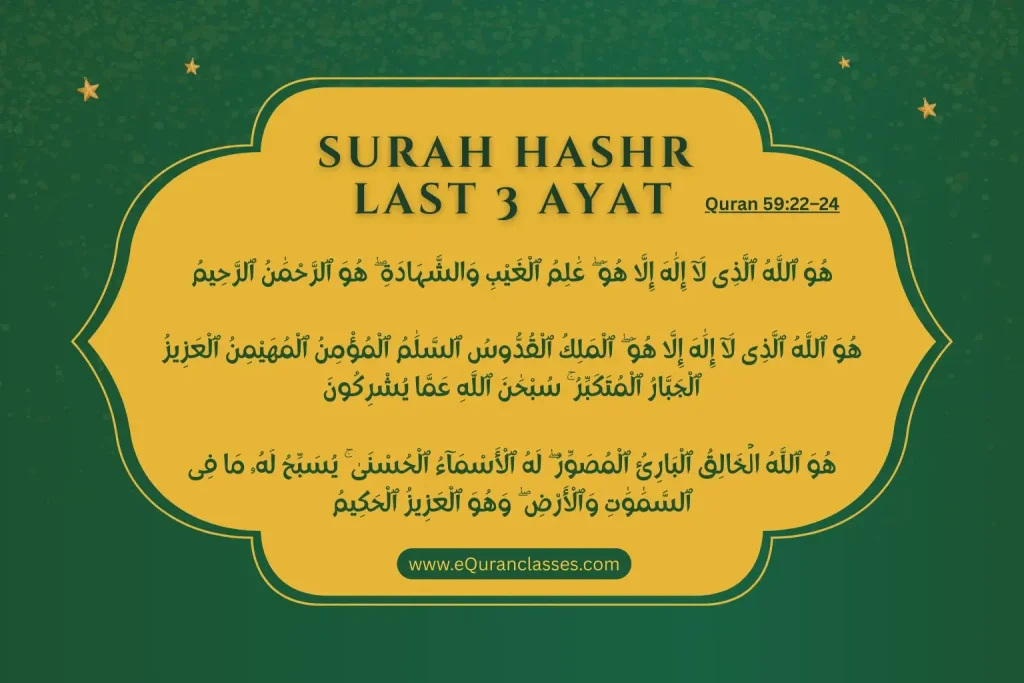
Why do these ayat matter? They carry spiritual treasures, protection, forgiveness, and blessings as promised in Hadith Tirmidhi 2922. Whether you’re a parent, new Muslim, or busy professional, these verses are easy to learn and life-changing. They remind us of Allah’s power and love, perfect for daily recitation.
References: Jami at-Tirmidhi 2922 (sahih), Quran 59:22–24.
Surah Al-Hashr: Key Facts
Surah Al-Hashr, the 59th chapter, sits in Juz 28 of the Holy Quran. It contains 24 powerful ayat. Revealed in Madinah, it highlights Allah’s guidance through the Prophet Muhammad ﷺ (PBUH). The surah narrates the exile of Banu Nadir, showcasing divine justice and believers’ faith.
These concluding verses uniquely praise Allah’s names, offering peace and protection. Unlike the last four or ten ayat, these three are concise, ideal for daily recitation. Their spiritual benefits, like forgiveness, shine in Hadith Tirmidhi 2922. eQuran Classes helps you master them with certified tutors.
Arabic Text and Transliteration of Surah Al-Hashr Last 3 Ayat
Here are the last three ayat (59:22–24) of Surah Al-Hashr in Arabic, with transliteration and tajweed guidance. These verses praise Allah’s names, offering peace and protection. eQuran Classes provides a free PDF to practice offline.
Arabic Text
هُوَ ٱللَّهُ ٱلَّذِى لَآ إِلَٰهَ إِلَّا هُوَ ۖ عَٰلِمُ ٱلْغَيْبِ وَالشَّہَادَۃِ ۖ هُوَ ٱلرَّحْمَٰنُ ٱلرَّحِيمُ
هُوَ ٱللَّهُ ٱلَّذِى لَآ إِلَٰهَ إِلَّا هُوَ ۖ ٱلْمَلِكُ ٱلْقُدُّوسُ ٱلسَّلَٰمُ ٱلْمُؤْمِنُ ٱلْمُهَيْمِنُ ٱلْعَزِيزُ ٱلْجَبَّارُ ٱلْمُتَكَبِّرُ ۚ سُبْحَٰنَ ٱللَّهِ عَمَّا يُشْرِكُونَ
هُوَ ٱللَّهُ الۡخَالِقُ ٱلْبَارِئُ ٱلْمُصَوِّرُ ۖ لَهُ ٱلْأَسْمَآءُ ٱلْحُسْنَىٰ ۚ يُسَبِّحُ لَهُۥ مَا فِى ٱلسَّمَٰوَٰتِ وَٱلْأَرْضِ ۖ وَهُوَ ٱلْعَزِيزُ ٱلْحَكِيمُ
Phonetic Transliteration
- Verse 22: Huwallahu alladhee la ilaha illa huwa, ‘aalimul-ghaybi wash-shahaadah, huwar-rahmaanur-raheem.
- Verse 23: Huwallahu alladhee la ilaha illa huwa, al-malikul-quddoos, as-salaamul-mu’minul-muhayminul-‘azeezul-jabbaarul-mutakabbir, subhaanallahi ‘amma yushrikoon.
- Verse 24: Huwallahu al-khaaliqul-baari’ul-musawwir, lahul-asmaa’ul-husnaa, yusabbihu lahu maa fis-samaawaati wal-ard, wahuwa al-‘azeezul-hakeem.
Tajweed Guide
- Madd (Elongation): Extend “Huwallahu” (2 counts) and “la ilaha” (4 counts) for smooth flow.
- Idgham: Merge “la” into “ilaha” without a pause for seamless recitation.
- Example: In “al-rahmaanur-raheem,” stress the “r” and elongate “maan” (4 counts).
Downloadable PDF: Grab our free “surah hashr last 3 ayat pdf” with Arabic, transliteration, and tajweed tips. Perfect for kids, new Muslims, and busy learners to practice anywhere.
Multilingual Translations of Surah Al-Hashr Last 3 Ayat
The last three ayat (59:22–24) of Surah Al-Hashr praise Allah’s names and attributes, bringing peace and blessings. Below, we share clear translations in multiple languages for all learners. eQuran Classes offers these verses in formats suited for kids, new Muslims, and global communities.
English Translation (Sahih International)
- Verse 22: He is Allah, besides whom there is no god, the Knower of the unseen and the seen. He is All-Merciful, Very-Merciful.
- Verse 23: He is Allah, besides whom there is no god, the Sovereign, the Supreme-In-Holiness, the Safe (from all defects), the GiverOf-Peace, the Guardian, the All-Mighty, the All-Repairer, the Sublime. Pure is Allah from what they associate with Him.
- Verse 24: He is Allah, the Creator, the Inventor, the Shaper. His are the Most Beautiful Names. His purity is proclaimed by all that is in the heavens and the earth, and He is the All-Mighty, the All-Wise.
English Translation by Mufti Taqi Usmani.
Urdu Translation
وہ اللہ وہی ہے جس کے سوا کوئی معبود نہیں۔ وہ چھپی اور کھلی ہر بات کو جاننے والاہے۔ وہی ہے جو سب پر مہربان بہت مہربان ہے۔
وہ اللہ وہی ہے جس کے سوا کوئی معبود نہیں ہے، جو بادشاہ ہے، تقدس کا مالک ہے، سلامتی دینے والا ہے، امن بخشنے والا ہےسب کا نگہبان ہے، بڑے اقتدار والا ہے، ہر خرابی کی اصلاح کرنے والا ہے،بڑائی کا مالک ہے۔ پاک ہے اللہ اس شرک سے جو یہ لوگ کرتے ہیں۔
وہ اللہ وہی ہے جو پیدا کرنے والا ہے، جو لانے والا ہے، جو صورت بنانے والا ہے، اسی کے سب سے اچھے نام ہیں۔ آسمانوں اور زمین میں جتنی بھی چیزیں ہیں، وہ اس کی تسبیح کرتی ہیں،اور وہی ہے جو اقتدار کا مالک ہے، حکمت کا بھی مالک ہے۔
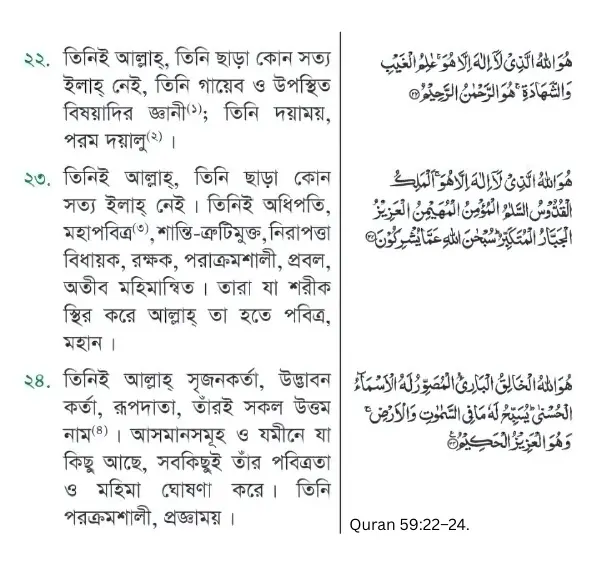
Bangla Tarjuma
Understanding Allah’s Beautiful Names in Surah Al-Hashr, Last 3 Ayat
Surah Al-Hashr’s last three ayat (59:22–24) shine with Allah’s perfect names, sparking faith and peace. Each name reveals His power and mercy, guiding believers closer to Him.
| Name of Allah | Meaning | Spiritual Impact |
|---|---|---|
| Al-Malik | The Sovereign King | Builds trust in Allah’s rule |
| Al-Quddus | The Pure and Holy | Purifies heart, inspires awe |
| As-Salaam | The Source of Peace | Grants calm and safety |
| Al-Mu’min | The Giver of Faith | Boosts courage and security |
| Al-Muhaymin | The Guardian | Ensures protection from harm |
| Al-Aziz | The Mighty | Strengthens hope in tough times |
| Al-Jabbar | The Restorer | Heals heart and worries |
| Al-Mutakabbir | The Supreme | Deepens humility and faith |
Al-Malik: The Sovereign King
Allah is Al-Malik, the true King who rules all creation. Tafsir Kabir explains, He reigns supreme, free from flaws. His sovereignty brings order, giving you trust in His plan.
Al-Quddus: The Pure and Holy
As Al-Quddus, Allah is pure, untouched by any fault. Tafsir Kabir says He’s always been flawless, inspiring awe. Reciting this name purifies your heart, strengthening devotion.
As-Salaam: The Source of Peace
Allah, As-Salaam, grants perfect peace. He protects you from future harm, as Tafsir Kabir notes. Feel calm and safe reciting His name daily.
Al-Mu’min: The Giver of Faith
As Al-Mu’min, Allah gives security and faith. He shields you from distress, Tafsir Kabir explains. This name builds courage in new Muslims and kids.
Al-Muhaymin: The Guardian
Allah, Al-Muhaymin, watches over you. If trouble comes, He removes it, says Tafsir Kabir. Trust His care for constant protection.
Al-Aziz: The Mighty
As Al-Aziz, Allah is all-powerful, always victorious. His might ensures safety, as per Tafsir Kabir. Recite to feel His strength in tough times.
Al-Jabbar: The Restorer
Allah, as Al-Jabbar, means the Restorer. Like a splint heals a broken bone, He fixes your heart, Tafsir Kabir teaches. His name brings hope and healing.
Al-Mutakabbir: The Supreme
Al-Mutakabbir shows Allah’s unique greatness. Tafsir Kabir says pride belongs only to Him, free from shirk. This name humbles us, deepening faith.
Tafsir (Exegesis) of Surah Al-Hashr Last 3 Ayat
The last three ayat (59:22–24) of Surah Al-Hashr reveal Allah’s greatness, strengthening faith and peace. Below, we explore their tafsir, drawing from authentic sources. eQuran Classes helps you understand these ayat with Wifaq ul Madaris-certified tutors.
What Does Verse 22 Teach About Allah?
Verse 22 says Allah alone is worthy of worship, knowing all—seen and unseen. Tafsir Ibn Kathir explains that this emphasises tawhid, affirming Allah’s mercy as Ar-Rahman and Ar-Raheem. His knowledge covers every secret, guiding believers to trust Him.
What Are the Attributes in Verse 23?
Verse 23 lists Allah’s majestic names: Al-Malik (Sovereign), Al-Quddus (Holy), As-Salaam (Peace), Al-Mu’min (Faithful), Al-Muhaymin (Guardian). Tafsir Jalalayn notes these names inspire faith, showing Allah’s power over all creation. They reject shirk, ensuring pure devotion.
Why Is Verse 24 Significant?
Verse 24 calls Allah the Creator (Al-Khaliq), Inventor (Al-Bari), and Fashioner (Al-Musawwir). Tafsir Maarif-ul-Quran highlights His best names (Al-Asmaa’ul-Husna), with heavens and earth glorifying Him. This verse deepens the connection, showcasing divine wisdom.
Insights for All Learners
For beginners, these ayat teach Allah’s love and protection. Advanced learners find depth in His attributes, fostering humility. Join eQuran Classes to learn tafsir, grow your faith, and earn blessings.
References: Quran 59:22–24, Tafsir Ibn Kathir, Tafsir Jalalayn, Tafsir Maarif-ul-Quran.
Hadith on the Virtues of Surah Al-Hashr Last 3 Ayat
The last three ayat (59:22–24) of Surah Al-Hashr carry immense spiritual rewards. Authentic hadith highlight their power for protection and mercy. This hadith is mentioned in Sunan al-Tirmidhi, Sunan al-Darimi, Musnad Ahmad, al-Muʿjam al-Kabīr, and Shuʿab al-Īmān.
In Sunan al-Tirmidhi, it is narrated:
“عن معقل بن يسار، عن النبي صلى الله عليه وسلم، قال: ” من قال حين يصبح ثلاث مرات: أعوذ بالله السميع العليم من الشيطان الرجيم وقرأ ثلاث آيات من آخر سورة الحشر، وكل الله به سبعين ألف ملك يصلون عليه حتى يمسي، وإن مات في ذلك اليوم مات شهيدا، ومن قالها حين يمسي كان بتلك المنزلة.”
Refernces: Sunan al-Tirmidhi, Book of the Virtues of the Qur’an, vol. 5, p. 182, Hadith no. 2922, Mustafa al-Babi al-Halabi Edition, Egypt
What Does the Key Hadith Say?
Jami at-Tirmidhi 2922 (sahih) narrates: Say “أعُوذُ بِاللهِ السَّمِيع العَلِيمِ مِنَ الشيطَانِ الرَّجِيم” three times each morning, then recite these ayat. Allah sends 70,000 angels to pray for you until evening. If you die that day, you gain martyr status. This hadith inspires daily recitation for divine blessings.
Morning and Evening Adhkar
These ayat fit perfectly into daily adhkar. Recite them after Fajr for protection all day. At Maghrib, they bring peace overnight. Pair with other remembrances for a stronger connection to Allah.
Expert Commentary
Wifaq ul Madaris scholars praise these ayat for deepening faith. They teach Allah’s names, fostering humility and devotion. Join eQuran Classes to learn their significance and earn Barakah.
References: Jami at-Tirmidhi 2922 (sahih), Sunnah.com, IslamQA.info (for weak narration clarification).
Benefits and Virtues of daily reciting these verses
Reciting the last three ayat (59:22–24) of Surah Al-Hashr brings powerful blessings. These verses strengthen faith, offer protection, and foster peace. eQuran Classes helps you unlock their benefits with expert tutors.
| Benefit | Description | Source |
|---|---|---|
| Spiritual Growth | Strengthens tawhid and faith | Tafsir Ibn Kathir |
| Protection | Shields from evil and calamities | Hadith Tirmidhi 2922 |
| Forgiveness | Invokes Allah’s mercy, hopes for paradise | Sunnah.com |
| Peace and Mindfulness | Reduces stress, calms heart | Journal of Islamic Studies (2023) |
| Wazifa Blessings | Aids obedient children, aakhirat ease | Islamic tradition |
Spiritual Benefits
These ayat affirm tawhid, uniting you with Allah’s oneness. They deepen your connection to the Creator, boosting faith. Regular recitation builds trust in Allah’s mercy, as Tafsir Ibn Kathir explains.
Protection from Harm
Hadith Tirmidhi 2922 (sahih) promises angels’ prayers for those reciting these ayat, shielding against evil and calamities. They guard you from Shaitan’s whispers, ensuring safety.
Forgiveness and Mercy
These verses invoke Allah’s mercy, promising forgiveness. Believers gain hope for paradise. Recite daily to feel divine love and grace.
Practical Benefits
Recitation promotes peace and reduces stress. Studies on dhikr, such as those in the Journal of Islamic Studies (2023), demonstrate the benefits of mindfulness. These ayat calm hearts and sharpen focus.
Wazifa for Specific Needs
Recite seven times daily for special blessings, like obedient children or an easier hereafter. This wazifa, rooted in tradition, brings Barakah to families.
How to Learn and Memorise Surah Al-Hashr Last 3 Ayat
Learning the last three ayat (59:22–24) of Surah Al-Hashr is easy and rewarding. These verses bring peace and blessings. eQuran Classes offers expert guidance to help kids, new Muslims, and busy learners memorize the Quran with confidence.
Memorization Guide
Follow this simple plan to memorize:
- Step 1: Listen to the ayat daily using our free audio/video.
- Step 2: Repeat each verse 10 times, focusing on one at a time.
- Step 3: Recite all three ayat together, five times daily.
- Step 4: Test yourself weekly with a family member or tutor. Audio aids from eQuran Classes make repetition fun and effective.
Daily Integration
Recite these ayat as a dua after Fajr for morning protection. Use them in Maghrib adhkar for nighttime peace. Add to daily remembrances for consistent Barakah, as taught by our tutors.
Live Classes
Join our Zoom sessions at eQuran Classes. Ijazah-certified tutors offer interactive learning. Flexible timings suit UK parents and US professionals. Recite live, get feedback, and grow your faith. Start with a free session today!
Comparison with Other Quranic Verses
The last three ayat (59:22–24) of Surah Al-Hashr shine brightly, but how do they compare to other verses? Below, we explore similarities and unique traits. eQuran Classes helps you study these ayat with certified tutors for deeper faith.
Surah Baqarah Last 2 Ayat
Surah Al-Baqarah’s last two ayat (2:285–286) focus on protection and mercy, like Surah Al-Hashr’s ayat. Hadith Bukhari (5009) says reciting them at night guards against harm. Both sets of verses strengthen believers’ trust in Allah’s mercy and forgiveness. Yet, Al-Hashr’s ayat are shorter, making them easier to memorize daily.
Surah Al-Imran Last 10 Ayat
Surah Al-Imran’s last ten ayat (3:190–200) emphasise faith and divine power, complementing Al-Hashr’s focus on Allah’s attributes. Tafsir Ibn Kathir notes Al-Imran inspires reflection on creation, urging steadfastness. Al-Hashr’s ayat, however, directly praises Allah’s names, offering a concise spiritual boost for all learners.
Unique Aspects of Surah Al-Hashr’s Last 3 Ayat
Surah Al-Hashr’s ayat (59:22–24) stand out for their brief yet powerful praise of Allah’s names (Al-Malik, Al-Quddus). Hadith Tirmidhi 2922 promises angels’ prayers for daily recitation, unmatched by others. Their focus on tawhid and protection makes them perfect for kids and new Muslims. Join eQuran Classes to master them!
References: Quran 59:22–24, 2:285–286, 3:190–200; Sahih Bukhari 5009; Jami` at-Tirmidhi 2922; Tafsir Ibn Kathir.
Real-Life Stories and Testimonials
The last three ayat (59:22–24) of Surah Al-Hashr touch hearts worldwide. They bring peace and Barakah to everyday lives. eQuran Classes shares stories from our students and tutors. Feel inspired to recite and grow your faith.
Student Stories
A UK parent, Fatima from London, shared her journey. “As a busy mom, stress overwhelmed me. I started reciting these ayat after Fajr. Peace filled my home, and my kids felt calmer too.” She found Barakah in family time, as Hadith Tirmidhi 2922 promises angels’ prayers.
In Canada, Ahmed, a new Muslim, discovered comfort. “Converting felt lonely until I recited Surah Al-Hashr’s last three ayat. They reminded me Allah hears me. Now, I feel protected daily.” His story echoes the sense of solace from recitation.
Another student, Sara from Pakistan, said: “During hardship, these ayat unlocked my heart. Tears came, but so did hope. Allah’s names healed my worries.” She credits them for spiritual closeness.
Tutor Insights
Ustadha Aisha, a Wifaq ul Madaris-certified tutor, shares: “Teaching these ayat shows their power. Students gain humility through Allah’s attributes. They leave classes with stronger faith and joy.”
Sheikh Bilal adds: “These verses reject shirk and affirm tawhid. In lessons, I see eyes light up as kids grasp mercy. Recitation builds lifelong connection to the Creator.”
Community Impact
Mosque groups in Birmingham use these ayat in study circles. Families gather weekly, reciting together for unity. One imam notes: “Our circle grew closer to Allah. Shared reflection fosters spiritual growth and protects our community.”
In Toronto mosques, new Muslims join circles. They discuss benefits like forgiveness and building bonds. These sessions turn strangers into a supportive family, echoing the Quran’s call to believers.
Join eQuran Classes to share your story and grow with others!
Frequently Asked Questions (FAQs)
Got questions about the last three ayat (59:22–24) of Surah Al-Hashr? We’ve got clear answers! eQuran Classes helps kids, new Muslims, and families understand these ayat with expert tutors. Let’s dive in.
Conclusion
Surah Al-Hashr’s last three ayat (59:22–24) are a divine gift. They praise Allah’s names, offering protection, mercy, and faith. Reciting them brings peace and strengthens your bond with the Creator. Tafsir Ibn Kathir highlights their role in affirming tawhid, while Hadith Tirmidhi 2922 promises angels’ prayers for daily reciters. These ayat guide believers to forgiveness and hope for paradise.
Sign up for eQuran Classes’ free trial today! Our Wifaq ul Madaris-certified tutors help you memorize with ease. Start now and feel the Barakah. Recite these ayat daily to unlock blessings in this life and Jannah in the hereafter.