Dua for Protection from Evil Eye: Authentic Duas for Shielding Against Hasad and Harm
The evil eye (nazar e bad) is a reality acknowledged in Islam. It can strike when envy or jealousy flows through a person’s gaze or heart. You may have felt it yourself—after receiving praise, posting family moments online, or sharing achievements—suddenly your health dips, peace feels disturbed, or your children fall unwell without a clear cause. Islam recognizes this unseen harm and provides a complete shield: duas (supplications) and Qur’anic recitations that protect believers from envy and its effects.
This article gathers 12 powerful duas for protection from the evil eye, supported by the Quran and authentic hadith. You will also find practical routines, ruqyah guidelines, and family protection strategies. Every dua is accompanied by the Arabic text, transliteration, translation, and usage instructions to help Muslims incorporate them into daily life.
What is the Evil Eye (Nazar) in Islam?
The evil eye (al-‘ayn) refers to the harm caused by a person’s envy or jealousy. The Prophet Muhammad ﷺ clearly stated:
“ الْعَيْنُ حَقٌّ وَلَوْ كَانَ شَىْءٌ سَابَقَ الْقَدَرَ سَبَقَتْهُ الْعَيْنُ وَإِذَا اسْتُغْسِلْتُمْ فَاغْسِلُوا ”
“The evil eye is real, and if anything were to overtake the divine decree, it would be the evil eye.”
(Sahih Muslim, Hadith 2188)
Islam teaches us that envy (hasad) is destructive, but Allah provides protection through His words. By reciting the Qur’an and authentic duas, a believer can safeguard themselves, their family, and their blessings.
Signs of the Evil Eye
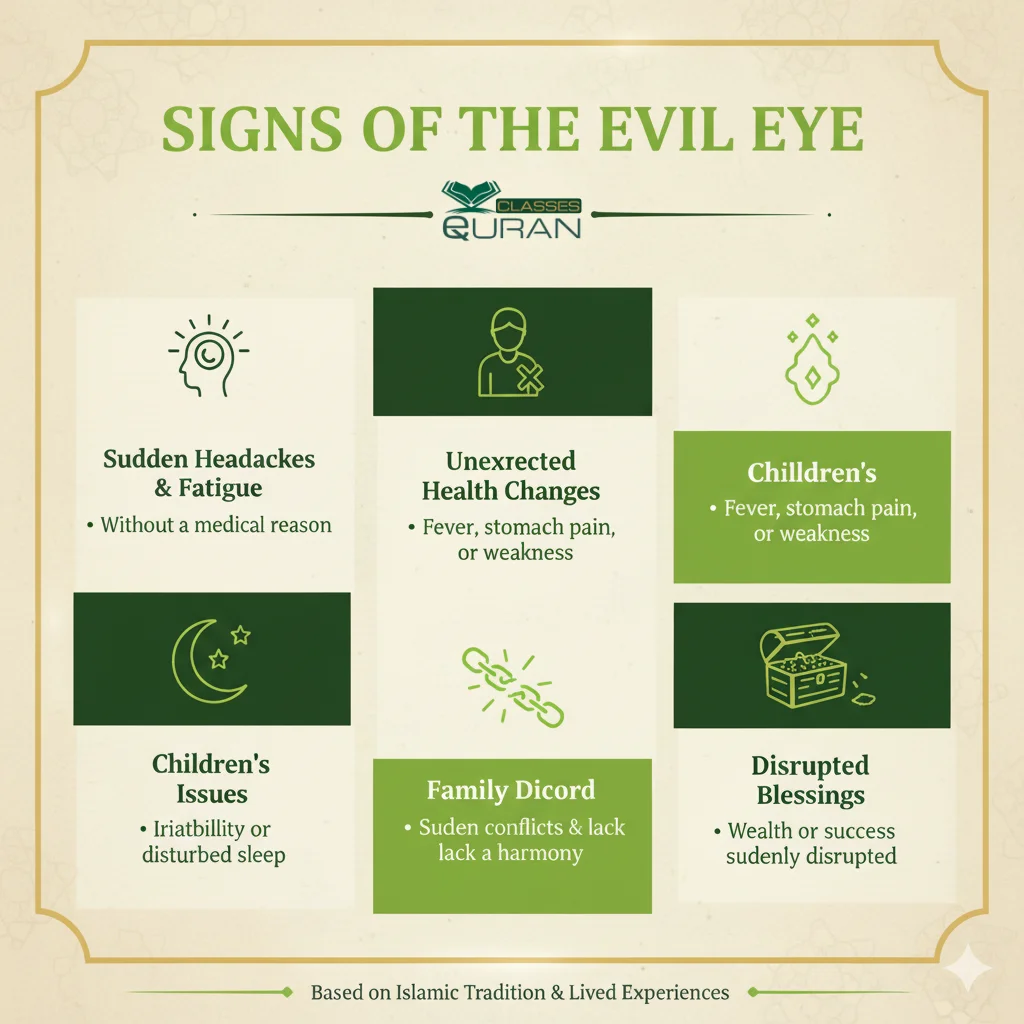
Islamic tradition and lived experiences highlight certain signs that may indicate the evil eye:
- Sudden headaches or fatigue without a medical reason.
- Unexpected changes in health (fever, stomach pain, or weakness).
- Irritability or disturbed sleep in children.
- Sudden conflicts and a lack of harmony within family life.
- Blessings in wealth or success are suddenly disrupted.
While these symptoms may also have natural causes, Islam encourages seeking protection from nazar e bad by turning to Allah with duas and ruqyah.
Teachings of the Prophet ﷺ on Protection from Envy
The Prophet Muhammad ﷺ not only confirmed the reality of the evil eye but also prescribed remedies. He taught his companions to recite ruqyah (spiritual healing) and to regularly seek refuge in Allah through Qur’anic chapters and supplications.
“ اسْتَعِيذُوا بِاللَّهِ فَإِنَّ الْعَيْنَ حَقٌّ ”
“Seek refuge in Allah, for the evil eye is real.”
(Sunan Ibn Majah, Hadith 3508)
He often recited Surah Al-Falaq and Surah An-Nas for protection and taught parents to recite them over their children.
Top 12 Powerful Duas for Protection from the Evil Eye
Here are 12 authentic duas and Qur’anic recitations, drawn from the Qur’an and Sunnah, that protect from envy, jealousy, and unseen harm.
1. Dua of Protection in Allah’s Perfect Words
أَعُوذُ بِكَلِمَاتِ اللَّهِ التَّامَّةِ مِنْ شَرِّ مَا خَلَقَ
Transliteration:
A‘oodhu bi kalimaatillaahi t-taammati min sharri maa khalaq.
Translation:
“I seek refuge in the perfect words of Allah from the evil of what He has created.”
(Sahih Muslim, Hadith 2708)
Usage: Recite three times morning and evening for comprehensive protection.
2. Ayatul Kursi (Surah Al-Baqarah, 2:255)
The Prophet ﷺ said that “Whoever recites Ayat al-Kursi at the end of every obligatory prayer, nothing but death will prevent him from entering Paradise.” An-Nasa’i reported it, and Ibn Hibban graded it Sahih (authentic).
مَنْ قَرَأَ آيَةَ اَلْكُرْسِيِّ دُبُرَ كُلِّ صَلَاةٍ مَكْتُوبَةٍ لَمْ يَمْنَعْهُ مِنْ دُخُولِ اَلْجَنَّةِ إِلَّا اَلْمَوْتُ (رَوَاهُ النَّسَائِيُّ , وَصَحَّحَهُ اِبْنُ حِبَّانَ)
Surah Al-Baqarah is a comprehensive shield for believers. It not only contains Ayatul Kursi (2:255) and the powerful last two ayats (2:285–286), but it also includes the verses that make fasting in Ramadan obligatory (2:183–185). These verses highlight that Allah intends ease and not hardship for believers. To understand the rulings, exemptions, and spiritual wisdom of fasting in detail, read our complete guide on Ramadan Fasting Rules: The Complete, Scholar-Backed Guide for Every Muslim.
Usage: Recite after every prayer for a daily shield.
3. Surah Al-Falaq (113) – Protection from Envy and Jealousy
قُلْ أَعُوذُ بِرَبِّ الْفَلَقِ ﴿١﴾ مِنْ شَرِّ مَا خَلَقَ ﴿٢﴾ وَمِنْ شَرِّ غَاسِقٍ إِذَا وَقَبَ ﴿٣﴾ وَمِنْ شَرِّ النَّفَّاثَاتِ فِي الْعُقَدِ ﴿٤﴾ وَمِنْ شَرِّ حَاسِدٍ إِذَا حَسَدَ ﴿٥
Translation:
Say, .I seek refuge with the Lord of the daybreak, from the evil of everything He has created, and from the evil of the dark night when it penetrates, and from the evil of the women who blow on the knots, and from the evil of an envier when he envies.
Usage: Recite three times in the morning and evening.
4. Surah An-Nas (114) – Refuge from Whisperings
قُلْ أَعُوذُ بِرَبِّ النَّاسِ ﴿١﴾ مَلِكِ النَّاسِ ﴿٢﴾ إِلَٰهِ النَّاسِ ﴿٣﴾ مِنْ شَرِّ الْوَسْوَاسِ الْخَنَّاسِ ﴿٤﴾ الَّذِي يُوَسْوِسُ فِي صُدُورِ النَّاسِ ﴿٥﴾ مِنَ الْجِنَّةِ وَالْنَاسِ ﴿٦﴾
Translation:
Say, .I seek refuge with the Lord of mankind, the King of mankind, the God of mankind, from the evil of the whisperer who withdraws (when Allah‘s name is pronounced), the one who whispers in the hearts of people, whether from among the Jinn or Mankind.
Usage: Recite three times with Surah Al-Falaq, particularly before sleeping.
5. General Supplication for Protection
رَبَّنَا آتِنَا فِي الدُّنْيَا حَسَنَةً وَفِي الْآخِرَةِ حَسَنَةً وَقِنَا عَذَابَ النَّارِ
Translation:
“Our Lord, give us good in this world and good in the Hereafter, and save us from the punishment of Fire.”
(Qur’an, 2:201)
6. Protection for Children
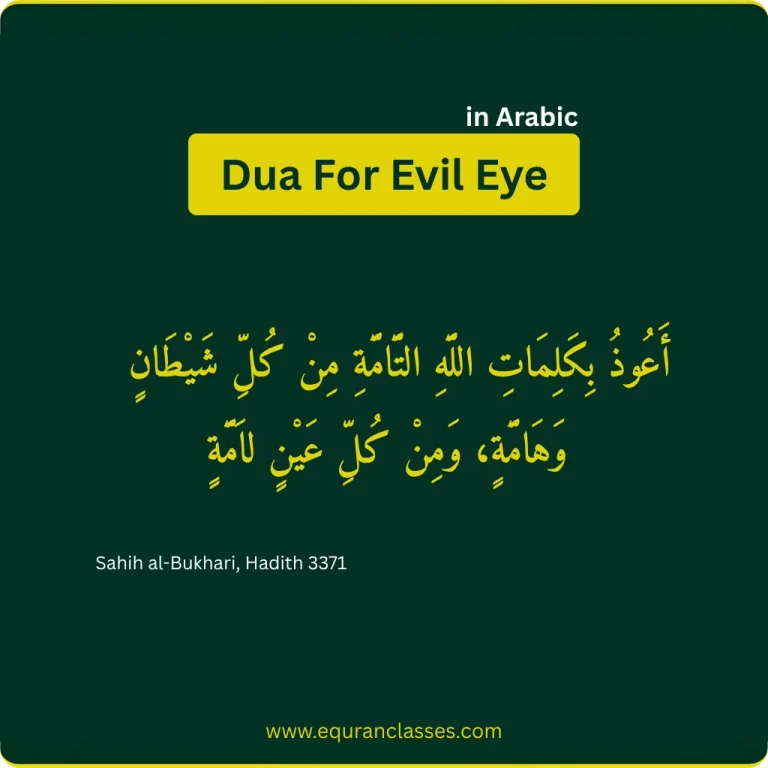
أَعُوذُ بِكَلِمَاتِ اللَّهِ التَّامَّةِ مِنْ كُلِّ شَيْطَانٍ وَهَامَّةٍ، وَمِنْ كُلِّ عَيْنٍ لاَمَّةٍ
Translation:
“I seek protection for you both in the perfect words of Allah from every devil, poisonous creature, and every evil, envious eye.”
(Sahih al-Bukhari, Hadith 3371)
7. Ruqyah for Healing the Evil Eye
Every night before going to sleep, the Prophet ﷺ put his hands together and recited Surah Al-Ikhlas, Surah Al-Falaq, and Surah An-Nas. Then he blew into his hands and wiped them over his body—starting from his head, face, and the front of his body. He did this three times.
أَنَّ النَّبِيَّ صلى الله عليه وسلم كَانَ إِذَا أَوَى إِلَى فِرَاشِهِ كُلَّ لَيْلَةٍ جَمَعَ كَفَّيْهِ ثُمَّ نَفَثَ فِيهِمَا فَقَرَأَ فِيهِمَا {قُلْ هُوَ اللَّهُ أَحَدٌ} وَ{قُلْ أَعُوذُ بِرَبِّ الْفَلَقِ} وَ{قُلْ أَعُوذُ بِرَبِّ النَّاسِ} ثُمَّ يَمْسَحُ بِهِمَا مَا اسْتَطَاعَ مِنْ جَسَدِهِ يَبْدَأُ بِهِمَا عَلَى رَأْسِهِ وَوَجْهِهِ وَمَا أَقْبَلَ مِنْ جَسَدِهِ يَفْعَلُ ذَلِكَ ثَلاَثَ مَرَّاتٍ
(Sahih al-Bukhari 5017)
8. Seeking Refuge from Satan
رَبِّ أَعُوذُ بِكَ مِنْ هَمَزَاتِ الشَّيَاطِينِ وَأَعُوذُ بِكَ رَبِّ أَنْ يَحْضُرُونِ
(Qur’an, 23:97–98)
Trtanslation:
My Lord! I seek refuge in You from the satans (devils).
9. Dua When Entering the Home
بِسْمِ اللَّهِ وَلَجْنَا وَبِسْمِ اللَّهِ خَرَجْنَا وَعَلَى رَبِّنَا تَوَكَّلْنَا
Translation:
“In the name of Allah we enter, and in the name of Allah we leave, and upon our Lord we place our trust.”
(Sunan Abu Dawood, Hadith 5096)
10. Morning and Evening Dhikr
بِسْمِ اللَّهِ الَّذِي لَا يَضُرُّ مَعَ اسْمِهِ شَيْءٌ فِي الْأَرْضِ وَلَا فِي السَّمَاءِ وَهُوَ السَّمِيعُ الْعَلِيمُ
Usage: Recite three times morning and evening.
(Sunan Abu Dawood, Hadith 5088)
11. Dua Against Enemies and Harm
اللَّهُمَّ اكْفِنِيهِمْ بِمَا شِئْتَ
(Hisn al-Muslim 132)
Translation:
“O Allah, suffice me against them however You will.”
12. Combined Ruqyah Routine
The Prophet ﷺ regularly recited Surah Al-Ikhlas, Al-Falaq, and An-Nas together for protection. Parents are advised to recite them to their children before sleep.
(Sahih al-Bukhari, Hadith 5017)
The Divine Connection: Allah’s Names for Ultimate Protection.
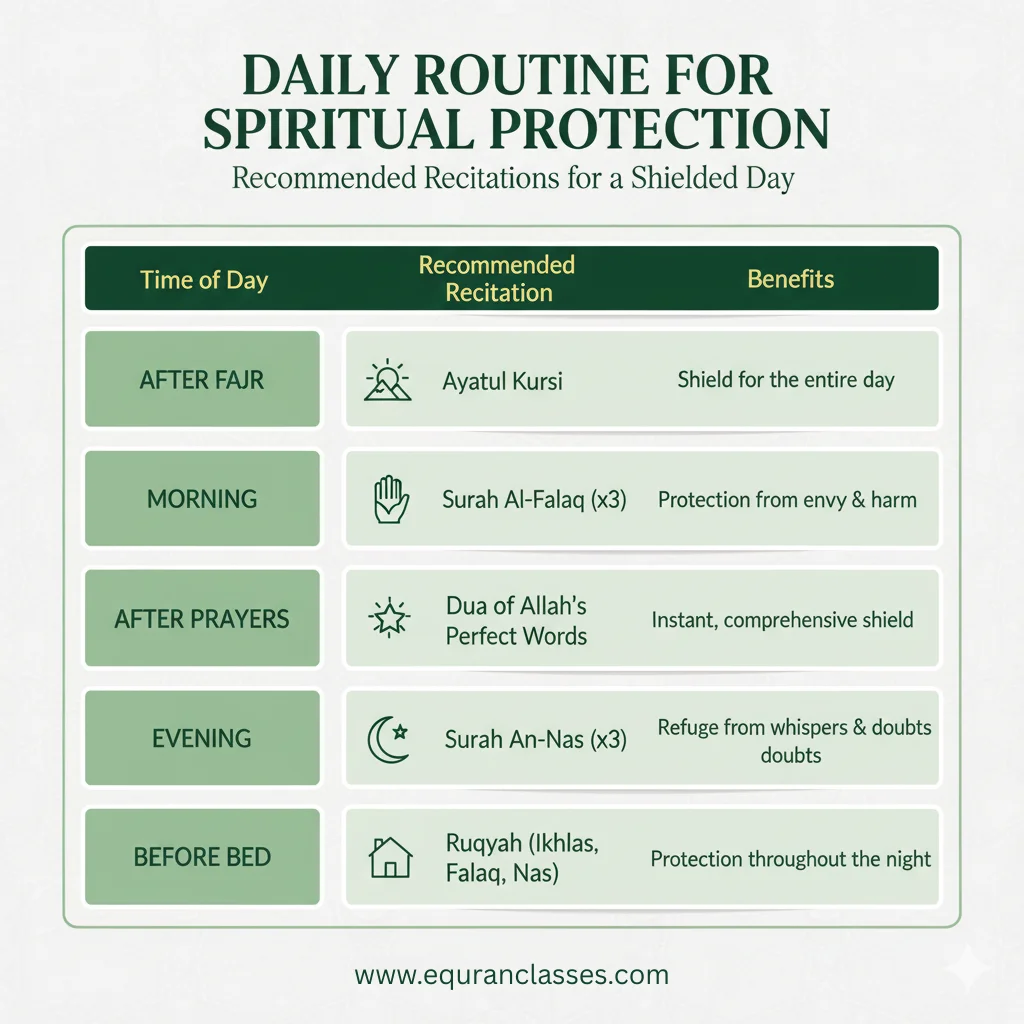
How to Recite: Daily Routine for Protection
| Time of Day | Recommended Recitation | Benefits |
| After Fajr | Ayatul Kursi | Shield for the day |
| Morning | Surah Al-Falaq (x3) | Protection from envy |
| After compliments | Dua of Allah’s Perfect Words | Instant shield |
| Evening | Surah An-Nas (x3) | Refuge from whispers |
| Before bed | Ruqyah (Ikhlas, Falaq, Nas) | Protection through the night |
Ruqyah: Removing Existing Evil Eye
If symptoms appear, the Prophet ﷺ prescribed ruqyah:
- Perform wudu.
- Recite Surah Al-Fatiha, Al-Falaq, and An-Nas three times each.
- Blow lightly on hands and wipe over the body or affected person.
- Make dua for healing.
This practice is authenticated and widely recommended by scholars.
Protecting Families and Children
- Recite the U‘eethukuma dua for children at bedtime.
- Begin mornings with Ayatul Kursi for the household.
- Before sharing photos or blessings publicly, recite Al-Falaq and An-Nas.
Benefits of Reciting Duas Against Nazar e bad
- Builds tawakkul (trust in Allah).
- Restores harmony in families affected by envy.
- Strengthens daily dhikr routines.
- Shields blessings from unseen harm.
The Prophet ﷺ himself treated companions with ruqyah when the evil eye was suspected. (Sahih al-Bukhari, Hadith 5739)
FAQs
Q: Can I recite in English if I don’t know Arabic?
Yes, sincerity matters most. But learning Arabic recitations gradually is encouraged.
Q: Which surahs are most effective?
Surah Al-Falaq and Surah An-Nas are the strongest shields, recited together.
Q: How often should I recite?
Three times in the morning and evening, as taught by the Prophet ﷺ.
About the Author
Mohsin Raza has been researching Islamic protective duas for over 10 years, referencing authentic tafsir and hadith collections such as Sahih Bukhari, Sahih Muslim, and Tafsir Ibn Kathir. His work is reviewed with scholarly guidance to ensure accuracy and benefit for Muslim families worldwide.
Strengthening Your Shield Through Knowledge
The foundation of true protection against evil lies in the strength of your faith and your connection to the Quran. While recitation of these powerful ayats and duas is essential, reciting the divine words with proper understanding and Tajweed multiplies their power and benefits.
To deepen your knowledge and ensure the accuracy of your recitation of every verse for ultimate protection, we invite you to join online quran classes in uk today. Learning from certified teachers will help you grasp the true significance of the Quran and strengthen your daily shield.
Conclusion: Embracing Allah’s Protection
The evil eye is real, but its harm cannot overpower the believer who seeks refuge in Allah. By reciting Qur’anic supplications and prophetic duas with sincerity, every Muslim can protect themselves, their family, and their blessings. Start today—make these recitations part of your daily routine and trust in Allah’s mercy.
“And when you have completed your recitations, place your trust in Allah alone, for He is the best of protectors.” (Qur’an, 12:64)
May Allah protect you and your loved ones from every harm. Ameen.